

The 3 jobs your fashion marketing should be doing (but probably isn't)
You're posting consistently, sending the emails, putting in the hours...and somehow your fashion marketing still isn't converting. Meet ACES - the 3-part process I developed over 20+ years in the industry to fix exactly this…
If you've been doing all the right things on paper, posting consistently, sending the emails, putting in the hours, and you're still wondering whether any of it is actually moving the needle...
You're absolutely not alone.
There's a specific feeling that comes with running a fashion brand whose marketing isn't quite working. You're busy. You're showing up. The numbers aren't terrible. But something isn't converting, and you can't quite put your finger on what.
Here's the answer most fashion founders never get told:
Marketing that works isn't a discipline problem, a volume problem, or a "you need to be on TikTok" problem. It's often a balance problem.
The brands whose marketing is working in 2026 have a clear sense of what each piece of content is for and the role it plays. The brands struggling don't.
Below, I'm going to share the process I developed over 20+ years in the industry: a simple, three-part way of looking at every piece of marketing your brand puts out and why each stage is essential for sales.
It's the process I use across everything inside The Fashion Business Coach, with the brands I work with privately, my courses and inside the new AI Fashion Marketing Dream Team.
Ready? Let's get into it...
If you're a fashion brand owner who wants more tips on running your business without burning out, I share stuff like this every Tuesday in my free newsletter, Designer Diaries. You can sign up free by clicking here.

The 3 Parts of a fashion marketing strategy that works
The three parts of the ACES strategy are: Attract Customers, Engage, and Sell.
1️⃣ Attract Customers (the front door) ✨
The job of Attract is to bring brand new people into your world.
People who don't know you exist, haven't heard your name, aren't following you on Instagram, aren't on your list. They're out there, living their lives, and your marketing has to find its way in front of them.
In practice, that looks like AEO and SEO that targets the actual words your ideal customer types into Google (or asks AI). Pinterest pins designed for the aesthetic they're already saving to their autumn capsule board. Reels with hooks that scream "this is for you" to your ideal customer, and "this isn't for you" to everyone else. Searchable captions and hashtags they're actually following.
This is the stage most fashion brands get wrong. Not because they're not posting, but because they're posting from inside their own world rather than from inside the customer's mind. (More on this in a future post, because honestly, it deserves its own.)
For example, Nobody’s Child is a brand that nails Attract. Search "sustainable dresses" on Google or any social platform in the UK and there they are, top of the page, in front of someone whose intent is already aligned with their product. They don't have to convince that visitor about sustainability. The visitor came looking for it.
That's Attract doing its job.
2️⃣ Engage (the glue) ✨
Once someone knows you exist, the rules change. Now you're not trying to be discovered. You're building trust, deepening the connection, turning a passing follow into a loyal customer who feels like they're part of something.
This is the bit most fashion brands skip without even realising it.
Engage content is the newsletters that read like a letter from a friend, not a sales pitch. The behind-the-scenes peek. The kind of customer service that makes someone want to message their group chat about you. Replying to comments like you actually care, because you do.
Sézane is the brand I always come back to here. They started small. Pop-ups online, no fashion connections, no empire backing them. What they built instead was a community: their content, their physical appartements (not "shops"), their newsletter, their tone. By the time you've engaged with Sézane a few times, you feel like you know them.
Engage is the glue. It's what turns "oh, I saw a Reel of them once" into "I've got the launch date in my calendar".
And here's the bit nobody really tells you: in fashion, where most brands are competing on aesthetics and product alone, Engage is often the single biggest differentiator. Aesthetics get duplicated. Community doesn't.
3️⃣ Sell (the part most BRANDS are pretty good at, or would be if THEY hadn't skipped parts 1 and 2)
The third job is the one most fashion founders default to: actually asking someone to buy.
Sell content is direct. The product is the star. The benefit is clear. The CTA isn't dancing around. This just dropped. The waitlist is open. Last 20 pieces. Restock now live.
There's nothing wrong with Sell content. You need it. A healthy brand sells regularly, confidently, and without apologising for being in business. (You made something beautiful. Of course you want to sell it 🙌.)
The problem is when Sell becomes the whole strategy.

Why balance is the whole game
Here's where ACES stops being a list and starts being a tool.
A growing fashion brand is sharing all three content types, on the regular. When one stage is dominating, or another is missing entirely, the whole system wobbles.
➡️ Too much Attract and you'll get traffic but no sales.
People are finding you, but nothing's converting them, because there's no Engage layer doing the relationship work and no Sell layer giving them a reason to buy right now.
➡️ Too much Sell and you'll quietly exhaust your audience without growing it.
You're asking and asking the same people to buy. They eventually go quiet, unsubscribe, or stop opening, and there are no new people coming in behind them to replace the energy.
➡️ Too much Engage and you'll build a beautiful, warm community that nobody is ever actually asked to buy from.
Lots of love. Not enough revenue. (We've all been in audiences like that. Lovely vibes, but no one's getting paid.)
Not sure which of these you are? Take my free fashion growth quiz here to help you find out »»»
Marketing without all three is like a three-legged stool with one leg missing. You can technically still try to balance on it. It just won't end well 🪑.
The pattern I see most often? Heavy on Sell, light on Attract, almost nothing meaningful in Engage. Which is why so many founders describe the exact same feeling: "I'm doing loads, but it doesn't feel like it's adding up."
It isn't a you problem. It's a balance problem.
Let me show you what this looks like in real life
Picture this - a small, considered fashion brand. Founder-led. Beautiful product. The customers who buy love it. Reviews are glowing. The pieces are well-made and well-priced.
But sales aren't growing the way the founder wants them to. She's posting consistently. She's running launches. She's emailing her list when she can. She's even tried paid ads here and there 💸.
If we pulled up her last month of marketing, and run it through an ACES lens, the picture becomes obvious:
Out of 30 pieces of marketing, 22 of them are Sell. New drop. Restocked. Last few. Final hours. The product is gorgeous and the photography is excellent, but the same several thousand followers are being asked to buy, again and again.
Four pieces are doing Attract, but only just. The captions are written from inside the brand's world, not from inside the customer's mind. They're not findable. The Pinterest account hasn't been touched since spring. There's no blog. AEO and SEO is a vague problem for future-her.
The remaining four pieces are doing Engage, but they're a bit lonely. A behind-the-scenes Story here, a "thanks for being part of this" caption there. Nothing systematic. Nothing that moves the needle.
The fix isn't more posting. It's not more discipline. It's not even a new content idea.
It's rebalancing the mix.
Putting structure behind Attract so new people can actually find her. Building an Engage layer that does the relationship work between launches. Letting Sell do what Sell does best, without it being the whole strategy.
Once that mix is right, everything else starts to compound. And the thing that felt like a treadmill starts feeling like a system 🙌.

A few questions you might have
"What if I'm not posting much yet?"
Honestly? Perfect timing. You'll build with structure from day one instead of trying to rejig later. Lucky you.
"Do I really need to be doing all three at once?"
Yes. Not perfectly, not at the same volume, not all on the same day. But the brand whose marketing works best is almost always running all three (unless they’re a large recognisable retailer with an 8-figure budget).
"Which one should I fix first?"
That depends on your specific mix, your audience size, your goals, and where the leak is. It's the kind of question that needs eyes on your actual content, not a generic answer. (Sorry, I know that's not the quick answer you were hoping for 😅)
If you'd rather skip the homework...
ACES is a process you can absolutely apply on your own. Plenty of fashion founders have, and they've shifted their results by getting the balance right.
But if you'd rather skip the "learning the process, training yourself to think in three stages, redesigning your content plan, creating the actual content, doing all of it in your evenings" bit, and instead just have ACES baked into every piece of marketing your brand puts out from now on automatically...that's exactly what I've been building.
It's called The Fashion Marketing AI Dream Team. A set of AI assistants designed specifically for fashion brands, with ACES (and 20+ years of fashion marketing experience) built in.
Founding member doors open soon, at the lowest price the product will ever be.
👉 Pop your name on the early-access list here and you'll be the first to hear when doors open.


------------ ⭐️ Want support with your fashion brand? ⭐️ ------------
➡️ Start here (launched brands) >>>
-------------------------------------------------------------------------------
• Free weekly email •
Designer
Diaries
Build a fashion brand that scales and sells

How AI Can Support Your Fashion Brand (And Where It Hits a Wall)
You've probably tried AI by now. Maybe it impressed you, maybe it disappointed you. Here's an honest look at where AI genuinely saves you time, where it hits a wall, and a first look at the AI tools I'm building specifically for fashion brands.
If you're a fashion founder right now, you've probably had at least one of these moments in the last few months.
You've typed something into ChatGPT. Maybe a product description, maybe a social caption, maybe "help me write an email to my customers." And what came back was...actually pretty good. Maybe even better than what you'd have written yourself at 10pm after a full day of packing orders 😅
And then a slightly unsettling thought crept in. If AI can do this, what does that mean for my business? Should I be using it more? Am I falling behind?
Or maybe you went the other way. Maybe you tried it, got something generic and soulless back, and thought: "This doesn't know my brand at all. It doesn't get the tone. It doesn't understand my customers." And you closed the tab and went back to doing everything yourself.
Here's the thing. Both of those reactions make complete sense. And both of them are only half the picture.
The myth that's floating around right now (the one I hear from fashion founders constantly) is that AI is an all-or-nothing situation. Either it's going to replace everything you do, or it's useless for a brand like yours.
Neither is true. And believing either version is costing you time, energy, and probably quite a lot of sanity.
In this post, I want to be honest about where AI can help your fashion brand right now, because some of it is brilliant. And I want to be equally honest about where it hits a wall. Because that wall is real, and understanding where it is changes how you run your business.
Let's get into it 👇
Why It's So Easy to Get Confused About AI Right Now
It's not your fault if you're unsure what to do with AI. The noise is deafening.
Every platform, every podcast, every business coach (guilty 😅) is talking about it. Half of them are saying "AI will transform your business overnight" and the other half are saying "it's going to destroy creativity." Meanwhile, you're just trying to get your collection photographed and your emails sent.
Nobody's really talking about the middle ground. The practical, everyday ways a fashion founder running a real business with a small team (or even a non-existent team) can use AI to save time and do better work.
And nobody's being honest about where AI genuinely cannot go.
So you're left guessing. Experimenting in the dark. Or, most commonly, adding "figure out AI" to the bottom of a to-do list that already never gets shorter.
Sound familiar? 😬
If you're a fashion brand owner who wants more tips on running your business without burning out, I share stuff like this every Tuesday in my free newsletter, Designer Diaries. You can sign up free by clicking here.

Mistakes I See Fashion Brands Make With AI
When founders treat AI as all-or-nothing, one of two things tends to happen. Both of them are expensive.
➡️ If you think AI is useless for your brand, you're doing everything manually. Every caption. Every email. Every customer service reply. Every product description. You're spending hours on tasks that could take minutes, not because the tasks are hard, but because there's just so many of them. And the result? You run out of time for the work that actually moves the needle. The strategic thinking. The relationship building. The creative direction that makes your brand yours.
➡️ If you think AI can do everything, you hand it the reins. You let it write your brand story, your marketing emails, your social content...without giving it enough context to sound like you. The output is polished but hollow. Your audience can feel it, even if they can't name it. Engagement drops. Trust erodes slowly. And the thing that made your brand special (you) gets diluted into something that sounds like every other brand on Instagram.
I've seen both. More than once. And the founders who are getting the best results right now? They're doing neither.
Where AI Genuinely Helps (And It's More Than You'd Think)
I think some founders are leaving real value on the table by not using AI where it's genuinely strong. So let's start with the good stuff.
📱 Content production
Writing Instagram captions, creating product descriptions, scripting Reels, drafting social content. These are tasks that eat hours every week. And when AI is set up properly (with your brand voice, your business context, and your strategy built in) it can get you about 95% of the way there. I wrote about this in more detail in my post about switching to Claude, but the short version is: the output is dramatically better than most people expect. You're polishing, not rewriting. Especially when you're batching content and need to produce eight to ten pieces in a sitting. You can even get it to update your Canva graphics for you too!
👀 The "set up properly" bit is the key though, isn't it? That's the part that takes time. And it's exactly why I'm building something to do the heavy lifting for you. AI team members, trained on my signature frameworks and backed by 20 years of fashion marketing experience. Want to hear more about it? Click here to register your interest.
💬 Customer service
Drafting replies to common questions. Sizing queries, shipping timelines, return requests, care instructions. AI can produce warm, professional responses that you can adjust slightly and send. This is especially powerful for founders who are drowning in DMs and emails and feel guilty about slow response times. (We've all been there.)
📩 Email marketing
This one's huge. Drafting newsletters, writing welcome sequences, creating launch email campaigns, putting together post-purchase follow-ups. Most fashion founders know they should be emailing more but the actual writing is what stops them. AI can draft an entire email sequence in the time it used to take you to come up with a subject line. You still bring the strategy, the stories, and the personal touches (that's what makes it yours), but the heavy lifting of getting words on the page? That gets a lot faster.
In case you didn't know, email marketing is one of the most powerful fashion brand marketing strategies in 2026 {read more here}
♻️ Repurposing
Turning a blog post into an email. Turning an email into social captions. Turning a video transcript into a written piece. This is tedious, repetitive work that AI handles well, and it means your ideas reach more people without you having to rewrite everything from scratch.
These are real, practical, time-saving applications.
And for a founder who's wearing every hat, even saving five hours a week on content, emails, and customer replies is five hours you can spend on sourcing, product development, or...let's be honest...not working until midnight ✨

And Here's Where AI It Hits a Wall
This is the bit that matters. Because if you don't understand where AI stops being useful, you'll either over-rely on it or dismiss it entirely.
👉 AI cannot diagnose your specific business.
It doesn't know that your email list of 200 people is actually your highest-revenue channel waiting to be activated. It doesn't know that your website's product pages are losing you sales because the add-to-cart journey has three unnecessary steps. It doesn't know that your Instagram engagement dropped because you shifted from founder-led content to editorial-only posts six months ago.
AI can summarise best practices. It can tell you "email marketing is important for fashion brands." But it can't look at all of your business activity, goals and customer needs. It can't review everything and say: "Here's where the money is. Here's what to fix first. Here's what to stop doing."
That's diagnosis. And diagnosis requires more context than an AI brain can currently process, experience, and the ability to see across someone's whole business ecosystem at once.
👉 AI doesn't know what you don't know.
This might seem subtle, but actually it’s pretty huge. When you ask AI a question, you get an answer to that question. But if you’re new to something, chances are you won’t know the right questions to ask. For example, a founder might ask AI: "How do I get more traffic to my website?" And AI will give a perfectly reasonable answer about SEO, social media, and paid ads.
But the real issue might be that the website isn't converting the traffic they already have. Or that they're attracting the wrong audience entirely. Or that their customer journey has a gap between first purchase and repeat purchase that's quietly costing them thousands.
You don't know what you don’t know. And AI can only work with what you give it.
👉 AI can't replace your taste, your judgment, or your relationships.
Your brand voice, the real one, the one that makes a customer feel something when they read your email.….that's built on knowing your audience. It's the way you describe a fabric that makes someone picture themselves wearing it. The way you follow up after a purchase that makes someone feel like a person, not a transaction number.
AI can mimic tone. It can't replicate the instinct that comes from being the person who designed the product, obsessed over the details, and read the customer's DM saying it made her feel amazing on her holiday 🥹
This isn't just sentimental. This is commercial. The personal connection is what builds the kind of loyalty that turns one-time buyers into customers who come back season after season. AI can support that. It absolutely cannot replace it.

The Approach That Works
The founders I see getting the best results right now are doing something quite specific.
They're using AI as a team member, not a replacement.
They lead with their brain. Their brand knowledge, their customer understanding, their creative direction. Then they hand the execution to AI. Not "create content for my fashion brand" (that's how you get generic output). More like: "Here's my brand voice, here's what my customers care about, here's the message I want to land. Now help me write it."
The difference is night and day.
When AI has context (real context, not just "I sell bikinis") the output is dramatically better. It's faster. It's closer to your voice. And the editing time drops because you're polishing, not rewriting from scratch.
This is something I feel strongly about. AI should be led by you, not leading you.The lazy approach ("I have a fashion brand, create content for me") will always pull from other people's content, other people's ideas, other people's brands. Which means it's never truly yours. But when you give it the intelligence it needs...your brand story, your customer language, your values...it becomes an extension of your thinking, not a replacement for it.
And here's where it gets exciting...
AI Tools Built Specifically for Fashion Brands (Yes, Really)
I've spent the last few months thinking about this exact gap. Because I work with fashion founders every day, and I see the same pattern: they know AI could help them, but they don't have time to figure out how to make it work for their brand. The setup is the barrier. Teaching AI who you are, what you stand for, how you talk, what your customers care about...that's the work nobody's done for fashion brands.
So I've built it.
I've created a set of AI team members designed specifically for fashion brands. Not generic marketing tools. Not another chatbot. AI team members built on the frameworks, strategies, and methodology I've developed over 20 years in the fashion industry. Each one is designed to handle a specific job, like content creation or email marketing and they work with your brand voice, not over the top of it.
Think of it as the team you've always needed but couldn't afford to hire.
A content writer who understands fashion. A newsletter editor who knows how to nurture, not blast. A customer service responder who sounds like a luxury department store, not a template.
I'm not ready to share all the details yet...but I will be soon. And I want the people who've read this far to be the first to know about it.
If this sounds like something your brand needs, click here to register your interest.
No commitment, just a raise of your virtual hand so I can make sure you're first in line when it's ready. I'll be opening it to a small founding group first, and they'll get access at the lowest price it'll ever be 👀
Here's What I'd Take Away From All of This
AI is not coming for your job as a fashion founder. It's coming for the tasks that eat your time without growing your brand.
The myth on how to use it most effectively as a fashion founder is the thing holding most people back.
AI is brilliant for execution. It saves real time on real tasks. And when you set it up properly, it can sound remarkably like your brand.
But it cannot see what's really going on in your business. It can't diagnose why revenue is inconsistent, or where your customer journey has gaps, or which of your marketing activities are actually driving sales and which are just noise. That takes a human eye. Ideally one that's looked at a lot of fashion brands and knows what to look for 😉
Use AI for the work it's good at. Save your energy for the strategic thinking that actually moves your brand forward. And if you want to be the first to hear about the AI tools I'm building specifically for brands like yours...

------------ ⭐️ Want support with your fashion brand? ⭐️ ------------
➡️ Start here (launched brands) >>>
-------------------------------------------------------------------------------
• Free weekly email •
Designer
Diaries
Build a fashion brand that scales and sells

Why Your Best Marketing Insights Probably Won’t Come From Fashion
The founders I’ve worked with who have the most distinctive brands are almost always watching a wider room than their competitors. Not just fashion. Here’s what they’re watching, what it’s telling them, and how to build the habit yourself.
In my last post, I wrote about the scent layering trend. Why it’s everywhere right now, how to try it yourself, and what I discovered when I experimented with it.
But there was a bigger point underneath all of that, and it felt like it deserved its own space.
Because here’s the thing about trend watching: most fashion founders do it in the most obvious direction. They watch other fashion brands. They follow the runways, check what competitors are doing, keep an eye on what’s performing on the big brand accounts.
Which makes total sense! But it’s also, if it’s the only thing you’re doing, a bit of a trap.
When everyone in your industry is watching the same sources, you all pick up the same signals. You’re all reacting to the same things at the same time. Your content ends up looking and sounding like everyone else’s, even if you’re trying really hard to stand out.
The founders I’ve worked with who have distinctive brands and marketing that feels special in the best way? They’re almost always watching a wider room.
What “wider trend watching” actually means
It’s not about following trends in unrelated categories for the sake of it. It’s about watching the things your customer cares about outside of getting dressed, because that’s where you find the real signals about what they're thinking and feeling right now.
Your customer doesn’t live in a fashion bubble. They have a life. They're making choices every day across food, interiors, beauty, travel, how they spend their evenings, what they're reading, what they're tired of. Their relationship with your brand lives inside that bigger picture, not separate from it.
The scent layering trend is a perfect example. On the surface it’s a beauty trend. Underneath it, it’s a much bigger signal: they're done with being handed something pre-packaged and told it’s for them.
They're curating. They want to build the something themselves, in a way that’s specifically theirs.
Does that tell you something about how your clothing brand could be positioned? About what your customer actually wants to feel when they shop? About the language you could use that would make them feel genuinely seen?
I think it does. 👇
If you're a fashion brand owner who wants more tips on running your business without burning out, I share stuff like this every Tuesday in my free newsletter, Designer Diaries. You can sign up free by clicking here.

Where the useful signals are coming from right now
Here’s what I’ve been noticing across a few different categories, and what I think it’s saying about the fashion customer in 2026:
➡️ Beauty: the curation shift
It’s not just scent layering. Across skincare and makeup, the trend is away from “follow this routine” and toward “build your own.” Personalised regimes, ingredient layering, doing your own research and editing advice to fit your actual skin. The message: I don’t want to be told what works. I want to understand it well enough to decide for myself.
What this says for fashion: the “capsule wardrobe” and “invest in fewer, better pieces” conversation isn’t going away.
Your customer wants to feel like they're building something considered, not just buying whatever’s available. Content and marketing that supports that instinct (rather than just pushing product) is going to land.
➡️ Food and hospitality: the slow and intentional swing
The ‘special occasion restaurant’ is having a huge moment. People are choosing fewer, more considered dining experiences over constant casual eating out. Tasting menus. Seasonal ingredients. Knowing where things come from.
The story behind the meal matters as much as the meal itself.
What this says for fashion: provenance, craft, and the story behind your product aren’t just nice-to-haves for fashion brands.
They’re increasingly what creates emotional value for the customer. If you know interesting things about how your pieces are made, who made them, where the fabric came from...that’s connection. That’s the thing that separates you from a brand that just posts product shots.
➡️ Interiors: the ‘quiet luxury’ shift
Maximalism has had its moment. What’s resonating now in interiors is considered, quality-led, slightly understated. Things that are built to last and chosen carefully rather than bought quickly. The room that looks effortless because every single thing in it actually earns its place.
What this says for fashion: if your customer is applying this lens to their home, they're probably applying it to their wardrobe too. Or wanting to.
Helping them do that, positioning your pieces as the ones that earn their place rather than just trend-cycle through, is a real opportunity. Especially if your price point sits above fast fashion. The ‘worth it’ conversation is one you should be having.
➡️ Wellness: the rejection of ‘optimise everything’
The relentless self-improvement energy that dominated wellness for the last decade is losing its grip. What’s coming through instead is something quieter: rest as a legitimate choice, rituals over routines, the idea that not everything needs to be tracked and measured and improved. Enjoyment as its own valid reason.
What this says for fashion: the ‘wear it because it makes you feel good’ argument has never been stronger.
Your customer is actively looking for permission to choose things they love over things that are practical or sensible or on sale. Give them that. Make them feel like buying something beautiful and well-made for no reason other than they wanted it is a completely reasonable thing to do.
The point isn’t to shoehorn all of these into your content at once. It’s to start noticing them. To build the habit of asking: what does this say about how my customer is thinking right now? And is there a thread from this back to what I do?

How to use this (practically)
Here’s the bit that matters most, because noticing trends is only useful if you do something with it.
1️⃣ Find the thread, not the topic
You don’t need to write a blog post about interiors or make a Reel about scent layering (unless you want to 😄).
The point is to find the thread connecting what’s happening in that category to what your brand is about, and pull on that.
So if the quiet luxury shift in interiors is saying “people want things that are worth it and built to last,” the thread for a premium womenswear brand might be: “the piece you’ll still be reaching for in five years.” That’s a content angle. That’s a caption. That’s a way of talking about your product that lands right now because it’s speaking to something your audience are already thinking.
2️⃣ Watch your actual customer, not just your ideal customer
This is the bit people skip. Before you go trend-spotting in the wild, spend ten minutes looking at what the real people who already buy from you are actually saving, sharing, and posting about.
Not the customer avatar you wrote in a brand strategy doc.
The actual humans who have actually bought your clothes.
What else are they into? What energy are they trying to create in their lives? What’s showing up on their feeds?
That’s your fastest route to the thread. Because you’re not guessing what the scent layering trend means for your specific customer. You’re seeing it directly.
3️⃣ Make it yours before you make it content
The brands that do this well don’t just reference a trend. They put their point of view on it. They tell you what they think about it, what it means for the way they design, what they agree with and what they’d push back on.
That’s the bit that makes content feel fresh and worth watching, rather than “oh, another brand jumping on this.” Your perspective is the differentiator. The trend is just the door.
4️⃣ Aim for the recognition moment
The best marketing content makes your customer feel seen. Not just targeted. Truly seen.
And the fastest way to create that is to show you understand the world they're living in, not just the outfit they're considering. When a brand references the same cultural energy your customer's are experiencing everywhere else in their life and connects it back to their clothes, that’s the moment they think:
“This brand really gets it.”
That’s not a small thing. That’s the thing that converts browsers into buyers and buyers into people who tell their friends.
Where to start
You don’t need a complicated system for this. Honestly, the simplest version is just:
Pay attention to what's happening outside fashion that’s stopping you in your tracks. A restaurant you loved that felt different. A beauty product everyone’s suddenly talking about. An interior trend you keep seeing. A conversation about how people want to spend their time.
And then ask one question: what is this actually about? Not what category it’s in. What human instinct is it tapping into? What does it say about what people want to feel right now?
Write that down somewhere. A notes app, a doc, a corner of your content planning spreadsheet. Over time you’ll start to see patterns. And those patterns will start showing up in your marketing in a way that feels fresh and specific and genuinely connected to where your customer is.
Rather than reactive, or generic, or like you’re following what everyone else is doing.
It sounds almost too simple. But it’s one of those habits that quietly changes the quality of everything you put out. ✨
Your customer doesn’t just want clothes that fit. They want a brand that fits their world. Wider trend watching is how you understand that world well enough to build something your ideal customer keeps choosing.
If this is the kind of strategic thinking you want more of, the Designer Diaries newsletter is where I explore it most. Fashion brand marketing, cultural observations, and the stuff that’s actually moving the needle for the founders I work with. You can sign up free below >>>
------------ ⭐️ Want support with your fashion brand? ⭐️ ------------
➡️ Start here (launched brands) >>>
-------------------------------------------------------------------------------
• Free weekly email •
Designer
Diaries
Build a fashion brand that scales and sells

Trends Aren’t Just About Clothes: The Scent Layering Trend Is One to Have on Your Radar
I have worn the same perfume for twenty years. So trying the scent layering trend felt like a genuine experiment. Here's what happened, what I discovered, and the £39 perfume that's been stopping people in their tracks.
One of the habits I’ve built over years of working in fashion is watching what’s happening outside of it.
Not instead of watching fashion. Alongside it. Because the trends that actually tell you something useful rarely start on a catwalk. They start in beauty, in interiors, in food, in the way people are talking about how they want to feel. And then, maybe six months later, you see the same energy show up in the way people are shopping for clothes.
The scent layering trend is one of those. And I think it’s worth knowing about.
Here’s what it is, why it’s taken off, and what happened when I started experimenting with it myself. (Spoiler: twenty years of perfume loyalty may have been...slightly disrupted 🤣)
I have worn the same perfume for twenty years
Alien, by Thierry Mugler. I found it in Switzerland when I was visiting my cousin. She was still at work, I was killing time in a department store, and I sprayed it almost by accident. I bought a bottle before she’d even finished her shift.
Twenty years. One scent. Completely and totally loyal. It’s become so associated with me that wearing something different felt slightly wrong, a bit like hearing your own name mispronounced.
Which is exactly why the scent layering trend caught my attention in the way it did.
Because it’s genuinely the opposite of how I’ve always approached fragrance. And yet, the more I looked at it, the more curious I got.
So what is scent layering?
The idea is this: instead of finding the one perfect signature scent and wearing it forever (my approach, clearly 🤣), you build one. You layer a lighter fragrance over a richer base, use a scented body lotion underneath a perfume to amplify it, or combine two scents on different pulse points and let them evolve together throughout the day.
It sounds more technical than it is. In practice it’s really just...playful.
And the results can be genuinely stunning, because you’re not just wearing someone else’s creation. You’re making something that’s yours.
That’s why it’s resonating so strongly right now. It hands something back to the wearer: the sense that the scent they’re wearing is a choice they made, not just a product they bought.
The same energy is showing up everywhere. Capsule wardrobes built to mix and last, slow fashion and rejection of fast and generic. Your customer is curating, not just consuming. Scent layering is that same instinct, just in a different category.
Ad | This post features perfumes gifted to me by Dossier. All thoughts are my own.
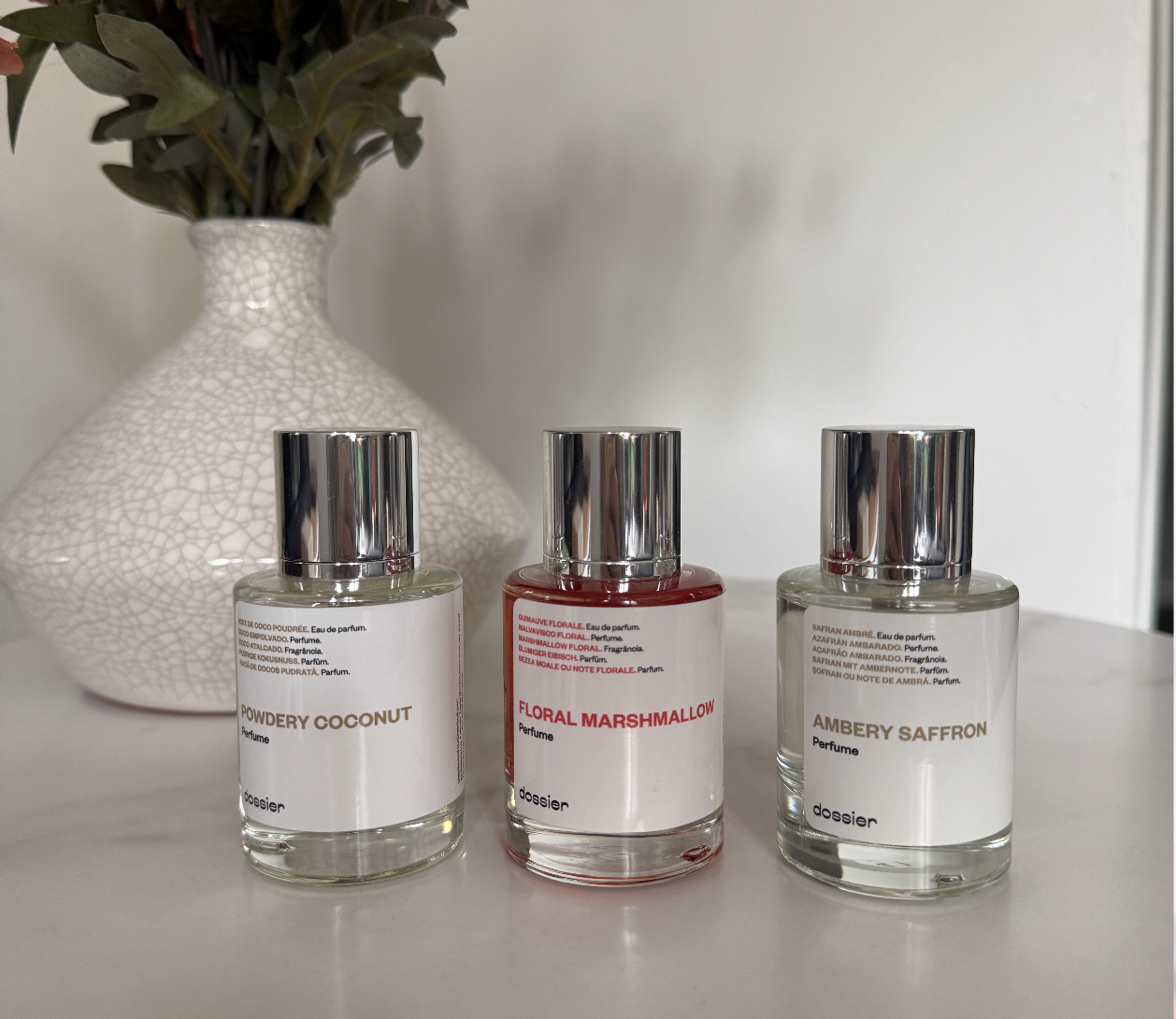
Gifted product from Dossier
Enter: Dossier
Dossier had been on my radar for a while and I just hadn’t found the time to try them. So when they very kindly offered to gift me three of their perfumes to explore, I was properly excited.
The three that I chose are £39 each, developed in Grasse in France (the perfume capital of the world), and Dossier are cruelty-free. Given the fragrance industry’s mixed record on animal testing, that matters.
Dossier are now available in Boots too, so you can smell them in person before you commit, or you can shop online if you prefer (if you do, try the quiz - it was super helpful and I love the perfumes it matched me with!).
The three scents I Tried
Powdery Coconut (inspired by Tom Ford’s Soleil Blanc)
The name made me expect something simple, but it's SO much more than that. Cardamom and pistachio at the top, ylang ylang, tuberose, and jasmine in the heart, coconut-amber and cedarwood in the base. What it actually smells like is tropical florals and relaxing on a beach somewhere with absolutely no plans. It’s warm and exotic and completely transporting. The kind of scent that makes wherever you are feel slightly more like a holiday.
Floral Marshmallow (inspired by Kilian’s Love, Don’t Be Shy)
Sweet, but beautifully so. Marshmallow and neroli up top (with bergamot stopping it tipping into pure sugar), orange blossom, honeysuckle, jasmine, and orris in the heart, and a vanilla, musk, amber base. I think of it like a really good dessert wine: rich, indulgent, not something I’d necessarily reach for every single day, but an absolute treat when the moment’s right. And as a layering ingredient, it’s stunning. It adds this gorgeous warmth underneath everything and makes the whole combination feel more...considered.
Ambery Saffron (inspired by Baccarat Rouge 540)
This one is my absolute favourite. I wasn’t expecting that, but here we are!
If you know Baccarat Rouge 540, you know exactly what to expect: that warm, amber-saffron signature that’s been one of the most talked-about fragrances of the last decade. It’s also the one I’ve seen selling for over £200 a bottle, which has always put it firmly in the “beautiful but absolutely not” category for me.
Ambery Saffron is £39 and it gives you the Baccarat Rouge vibe without the price tag. Saffron and orange blossom at the top, cedar and plum in the heart, amber, oakmoss, and balsam fir in the base. Real presence. A couple of sprays is enough and it has had people asking what I’m wearing, which is the only review that actually counts. I’ve been wearing it most days since it arrived!
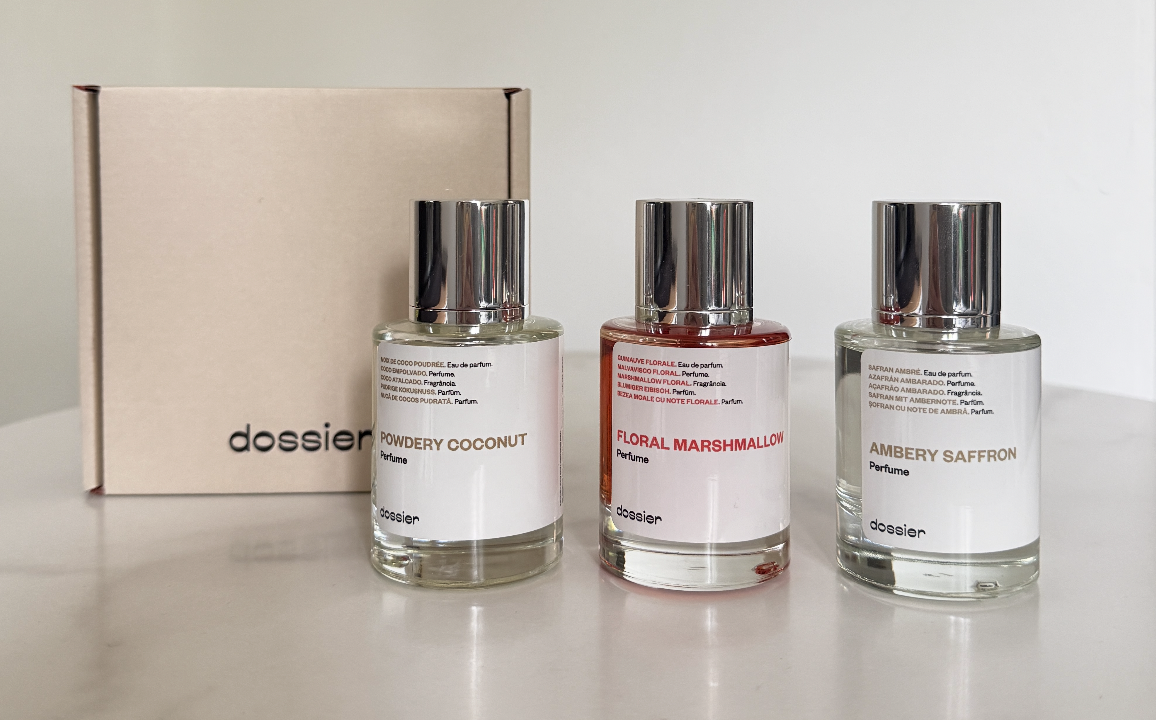
Gifted product from Dossier
How to layer: the combinations I’ve loved
The basic principle: lighter first, richer on top. Give each layer a moment to settle before adding the next. And if you have a vanilla body lotion, use it as your base before you even open a bottle, because it gives the fragrance something to hold onto and can extend the wear significantly.
🤩 Floral Marshmallow under Powdery Coconut:
The vanilla and musk of the Floral Marshmallow settles into the coconut and amber of the Powdery Coconut and the result is this soft, warm skin scent that smells effortless. Like a really great version of yourself on a really good day. My go-to for easy, happy wearing.
🤩 Ambery Saffron over Floral Marshmallow:
The saffron takes the sweetness somewhere warmer and more complex. This is the going-out combination. It gets compliments.
🤩 Vanilla body lotion plus Ambery Saffron:
My favourite way to wear the Ambery Saffron. The lotion amplifies the amber and makes the whole thing richer and longer-lasting. You almost certainly already have a vanilla lotion already. Use it!
General layering tips (for any perfumes you already own)
You don’t need to buy new scents to start experimenting with layering. Here’s how to make it work with whatever you already have:
👉 Start with fragrance families that complement each other.
Florals and musks are natural partners. Orientals (amber, vanilla, spice) work beautifully with florals. Woody scents layer well with almost anything. Where it gets trickier is mixing two very similar fragrance families, like two heavy orientals at once, because they can compete rather than combine. When in doubt, pair something light with something richer.
👉 Lighter first, heavier on top.
Apply your airier, fresher scent first and let it settle for 30 seconds or so. Then add the richer, denser scent on top. The lighter one creates a kind of base for the heavier one to anchor to, rather than the two fighting each other straight away.
👉 Use your body lotion as a foundation.
Unscented or lightly vanilla-scented body lotion applied before any perfume can make an enormous difference to how long a fragrance lasts and how it wears. Fragrance clings to moisturised skin. It’s the easiest trick and the most underused one.
👉 Apply to pulse points, but not all of them at once.
Wrists, the inside of your elbows and neck. The warmth amplifies the scent as the day goes on. For layering, try applying one scent to your wrists and another to your neck, then let them meet in the middle rather than blending them directly on top of each other.
👉 Two or three layers maximum.
More than that and the individual scents stop being distinguishable. The goal is a blend, not a pile-up. Two layers is usually perfect. Three works if one of them is very light (like a body lotion or a delicate mist).
👉 Don’t rub your wrists together.
A classic mistake. Rubbing breaks down the fragrance molecules and changes how the scent develops. Spray or dab, let it settle, leave it alone.
👉 Give each layer a moment.
30 seconds between applications is enough. You’re not waiting for it to dry, just letting it settle slightly before adding the next one. This is what stops the combination smelling muddy.
👉 Trust your nose, not the rules.
There genuinely are no hard rules here. If two scents smell good together on your skin, they smell good together. Your body chemistry affects how fragrance develops, so the only test that matters is how it smells on you. Experiment and have fun!
The best way to find your combinations is just to start. Grab two things you already own, try them together on different pulse points, and give it an hour to see how they develop. Fragrance changes throughout the day and what smells ok at first can become something beautiful by the afternoon.
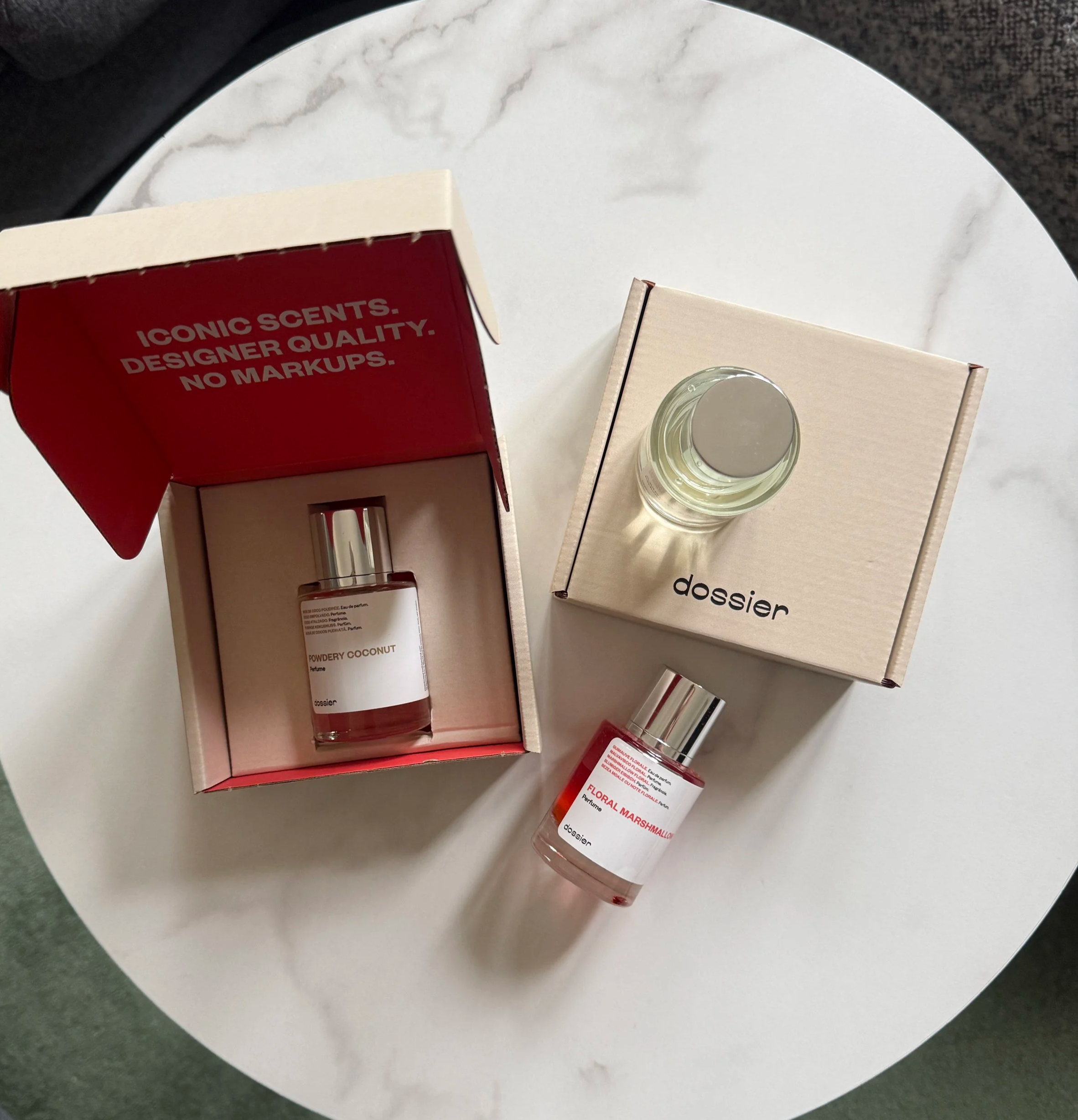
Gifted product from Dossier
On Alien, and what this whole experiment actually changed
Ngl, I'll still be wearing it. We’ve had twenty years together and I’m not ending that now 🤣
But, Dossier has genuinely made me mix things up, and I’ve been really excited about it in a way I didn’t expect. The Ambery Saffron especially has been a revelation. Something about finding a fragrance that smells that luxurious at that price point makes you want to actually wear it, which sounds obvious but isn’t always the case with perfume.
And the bigger shift is this: trying these new combinations has made me want to play more. I wouldn’t wear the same outfit every single day, I’d find it limiting, dull and I like to dress for my mood. I’ve never thought about fragrance that way before, but now I do. Different scents for different moods and days and moments feels suddenly obvious, and I’m annoyed it took me this long to get here!
Maybe the twenty-year signature scent era doesn’t have to be the only era. I’m keeping my options open!
Find all three Dossier scents in Boots and online here.
If you’re a fashion founder and the ‘watching trends outside your category’ point resonated, I’ve written a whole separate post on what the scent layering trend is actually saying about your customer’s mindset and what to do with it (click here). And if you want more of this kind of thing, the Designer Diaries newsletter is where most of it lives. >>>
------------ ⭐️ Want support with your fashion brand? ⭐️ ------------
➡️ Start here (launched brands) >>>
-------------------------------------------------------------------------------
• Free weekly email •
Designer
Diaries
Build a fashion brand that scales and sells

Why Customer Retention Is the Most Underrated Growth Strategy in Fashion
We've all been taught that growth means more followers, more traffic, more new customers. But what if your biggest revenue opportunity is sitting right there in your existing customer base? McKinsey's 2026 report named retention as the number one theme in fashion this year, and most brands are barely touching it. Let's talk about why, and what to do instead.
Customer retention is the single most powerful growth strategy most fashion brands are overlooking. And in 2026, the data backs that up louder than ever.
Here's something I've noticed from working with fashion founders over the last few years. When a brand comes to me and says "I want to grow," my first question is almost never about their social media. It's not about their press features. It's not about ads.
It's: what's happening with the people who've already bought from you?
And almost every time...there's this pause. This little moment of "oh. I haven't really thought about that."
Which, honestly? Makes total sense. Because we've all been taught that growth means more people, not deeper relationships with the ones we already have.
McKinsey's 2026 State of Fashion report named customer retention as the number one strategic theme for the industry this year.
Not new customer acquisition. Not viral marketing. Not AI.
Retention.
And yet most of us (me included, once upon a time 😅) pour the majority of our energy into attracting new people while our existing customers are just...there. Waiting. Already sold on what we do.
So let's talk about why that happens, what it's costing you, and what the fashion founders who are scaling are doing instead. Because spoiler: it's not complicated. And it's actually kind of lovely.
Let's go!
If you're a fashion brand owner who wants more tips on running your business without burning out, I share stuff like this every Tuesday in my free newsletter, Designer Diaries. You can sign up free by clicking here.
Why We've All Been Taught to Chase New Customers
Right, first things first. If you've been focussed almost entirely on getting new eyeballs on your brand? Welcome to the club. Genuinely, we've all been there.
Because that's what every piece of marketing advice tells you to do, isn't it?
Grow your following. Run ads. Get more traffic. Reach more people. Post more. Be more visible. Get "out there."
Social media platforms are literally designed around this.
And most of the marketing advice out there for fashion brands is geared toward startups who don't have customers yet.
But here's where it gets interesting.
If you've been running your brand for a while...you've probably outgrown that advice without even realising it. Because when you already have customers who've bought from you, loved what they received, and told their friends about it? The playbook changes completely.
The problem is, nobody really shouts about that shift. So we keep doing what worked at the start, chasing new people, when the real opportunity has been quietly building right under our noses the whole time.
This is the part nobody puts on Instagram, isn't it. 😬
What This Imbalance Is Actually Costing You
OK so here's where it gets a little bit uncomfortable. But in a good way, I promise. Because once you see this pattern, you can't unsee it, and that's when things start to shift.
When most of your marketing energy goes toward acquisition and very little goes toward retention, a few things tend to happen. And they're sneaky, because they don't look like a retention problem on the surface.
Revenue starts feeling like a lottery.
Great months. Quiet months. Absolutely no idea what's driving the difference. You might blame the algorithm, or the time of year, or Mercury being in retrograde (no judgement, I've been there 🤣).
But often what's actually happening is that every sale is essentially a first-time sale. There's nothing structured bringing people back, so you're starting from scratch every month. And that's exhausting.
"Why do I have amazing weeks followed by absolutely nothing?"
If that thought has crossed your mind...yeah. You're not alone.
Every sale feels like it's getting harder.
Here's the thing about 2026: getting a new customer's attention is genuinely expensive right now. Ad costs are up. Organic reach is taking more and more energy. AI is answering people's questions before they even get to your website.
Meanwhile, someone who's already bought from you? Who trusts your quality, knows your sizing, gets that little buzz of excitement when they see your name in their inbox? They need a fraction of that effort to buy again.
The data on this is actually wild. Acquiring a new customer costs anywhere from 5-25 times more than keeping an existing one.
5-25 times more expensive 😳
So when most of our energy is going toward the hardest, most expensive way to make a sale...while a much easier path is sitting right there? That's worth paying attention to.

A Quick Story (Because I Think This Lands Better Than Data)
Not long ago, I was going through my own email subscriber list. Not for a launch, not to promote anything. Just...having a look. And I found someone who'd been subscribed since 2022.
2022! That's years of quietly opening my emails, reading my content, being part of my world.
And I suddenly realised I'd never once reached out to them personally. Not once. So I did. Just a simple message: thanks for being here, I really appreciate it.
No pitch. No CTA. No "and by the way, here's my latest offer." Just a genuine thank you.
Not long after, that customer made a purchase from me.
And it made me think...how many of us have people like that? People who've bought from us, or subscribed, shown up consistently...and we've been so busy trying to find the next person that we haven't stopped to look after the ones already here?
I'm definitely guilty of it. Most of us are. It's not that we don't care about our customers (we obviously do). It's just that the "get more people" drumbeat is so loud that the "look after your people" bit gets drowned out.
But when you flip that? When you actually turn your attention to the people who already love what you do? That's when things start to get really exciting.
Wondering where your biggest growth opportunity is right now and what to work on next? Take my free quiz and find out in a couple of minutes.
What the Fashion Brands Who Are Growing Do Differently (And It's Honestly Quite Simple)
Right, so what does great retention actually look like for a fashion brand? Because I promise it's not some fancy-but-complicated system, or a £10k CRM software. It's much more human than that.
They get excited about their "small" audience.
OK, this is one of my favourite reframes ever and I will not apologise for banging on about it. 😅
Imagine every person on your email list physically walked into your pop-up shop right now. If you've got 100 subscribers? That's 100 real humans standing in your space. You'd be buzzing. You'd be running around trying to talk to everyone.
But when it's a number on a screen, suddenly it's "I've only got 100 people on my list."
ONLY?!
Those people have raised their hand and said "I'm interested in what you do." At premium price points especially, you don't need tens of thousands of fans. You need a smaller group of people who genuinely love what you create and keep coming back. That's worth more than a massive, disengaged audience who couldn't pick your brand out of a lineup.
Quality over quantity. Always.
They make it personal (and it's their superpower).
Here's something the big brands can never compete with you on: you can actually know your customers.
You can reply to their DMs yourself. You can follow up after a purchase and ask how they found it. You can reach out when something new comes in and say "I thought of you when I designed this." You can send a genuine thank you that isn't automated.
That kind of personal connection? It's a smaller brand's single biggest competitive advantage. Nobody tries to build a relationship with Nike because they know there’s a massive team of people working there. But when you as the founder show up, the actual human behind the brand? People notice. They feel it. And they come back.
And it's not just small brands doing this.
When I worked for Boden - who reported sales of £161.7 million last year - the founder Johnnie Boden would sometimes answer customer service calls.
Because he loved speaking to customers, hearing about their day, learning what they loved about the brand and what they didn't. And that customer data? It's pure gold. And a customer's reaction when they realise it's Johnnie himself? Priceless!
I always used to love overhearing those convos!
Think about the brands you're loyal to. The ones where you don't even consider shopping elsewhere. There's a reason Apple customers don't compare phones when it's time to upgrade. They just buy the next one. The experience was that good. The trust runs that deep.
That kind of loyalty? It's available to you too. Especially if you're on the smaller side, where every interaction can feel genuinely personal. Being a smaller business isn’t a limitation. It's your edge.
They care about what happens after the sale.
Most of us put all our creative energy into the journey before someone buys. The content, the ads, the product page, the checkout experience. And then...tumbleweed.
But the brands that grow consistently? They care just as much about what happens next. The follow-up message. The styling tip. The "you might also love..." recommendation based on what they bought. The early access to new pieces before anyone else sees them.
None of this is complicated. It's small, thoughtful touches that make someone feel remembered and special. And they compound over time into something beautiful: customers who become your biggest champions. They recommend you to friends. They tag you on social without being asked. They come back because they were thinking about you, not because a retargeting ad chased them around the internet. 😅
That's how sustainable growth actually works. Not more ads. More care.
What You Can Start Shifting (Starting This Week, If You Want)
If this is resonating (and if there's a little voice in your head going "...OK fine, I've definitely been neglecting my existing customers a bit"), here are some things to think about:
1️⃣ Notice where your energy goes.
This week, pay attention to how you split your time between attracting new people and nurturing the ones who've already bought. For most of us, the balance is way off. And just seeing that is the first step to changing it.
2️⃣ Rethink your email.
Not as a megaphone for announcements, but as a conversation. The best email marketing for fashion brands doesn't feel like marketing at all. It feels like getting a note from someone you trust. Behind-the-scenes moments, early previews, the real story behind a new piece. When email feels like that, people don't unsubscribe. They look forward to hearing from you.
And I know, I know. "But I don't want to bother people." I hear this so often from founders, and here's what always makes me smile: the ones who worry about being annoying are usually the ones who'd be brilliant at it. Because the brands that actually bother people are the ones sending non-stop "BUY NOW" emails with zero personality. If you care enough to worry about it? You're already ahead. 💛
3️⃣ Follow up with someone. Just one person.
Seriously, just one. Someone who bought from you recently. A simple message: "Thanks so much for your order, I really hope you love it. Let me know if you need anything."
That's it. No discount code. No upsell. Just a human being nice to another human.
You'd be amazed how far it goes. And how much it costs. (Spoiler: literally nothing. 😅)
Inside The Fashion Marketing and Sales Roadmap, retention and the customer journey are one of things I review when I work with a brand, because that's often where the biggest growth hides. It's not always about finding more people. It's often about looking after the ones you've already got, much better.
"But I Still Need New Customers Too, Right?"
Yes! Absolutely. Acquisition still matters. You still need new people discovering your brand and falling in love with what you do.
But here's the reframe that changes everything: when your retention is strong, acquisition gets easier. Happy customers tell their friends. They leave reviews. They share your pieces on social without being prompted. They literally become a source of new customers that doesn't cost you a penny.
And when your existing customers are buying more often, you need fewer new customers to hit the same revenue. Your business feels less fragile. Less dependent on the algorithm gods. Less reliant on the next ad campaign or viral moment.
It's not about choosing one over the other. It's about getting the balance right. And for most of us, that balance has been tilted too far in one direction for a while now. No judgement here, just an invitation to review your retention strategy.
Here's THE Take Away
If your brand is already making sales, if you have people out there who genuinely love what you create, you are sitting on way more growth potential than you probably realise.
The idea that growth means constantly chasing new audiences? It's a myth. A very loud, very convincing myth...but still a myth.
The fashion brands that are growing sustainably and profitably right now are the ones that figured out something beautifully simple: look after the people who already believe in you.
Make them feel seen. Give them reasons to come back. And let that loyalty do the heavy lifting.
It doesn't require a huge budget. It doesn't require some complicated tech stack. It requires a shift in focus. Inward instead of outward. Depth instead of breadth.
And honestly? It's one of the most rewarding shifts you'll make. Because it means spending more time building real relationships with people who are already cheering for you.
That's the good stuff. That's where the magic is. ✨
Want to find out where the hidden growth is in your brand?
Take The Fashion Growth Quiz to get a snapshot of where your biggest opportunities are sitting right now. It takes a few minutes and you'll come away with a much clearer picture of what to focus on first.
------------ ⭐️ Want support with your fashion brand? ⭐️ ------------
➡️ Start here (launched brands) >>>
-------------------------------------------------------------------------------
• Free weekly email •
Designer
Diaries
Build a fashion brand that scales and sells

The BEST Fashion Brand Marketing Strategies for 2026 (What's Changed and What Actually Works Now)
The marketing landscape for fashion brands has shifted fast. AI is changing how your customers find you, email is your most underleveraged asset, and the smartest brands are investing in retention and real-world activations. Here's what's actually working right now.
If your fashion brand's marketing strategy hasn't changed in the last few months...it's already out of date.
Not because you're doing anything wrong. But because the way your customers find you, research you, and decide whether to buy from you has shifted fast. And most fashion brands haven't caught up yet.
AI is answering your customers' questions before they ever reach your website. The channels that used to drive reliable traffic are behaving differently. And the brands that are growing right now? They're doing things most fashion founders haven't even started thinking about yet.
That's not meant to stress you out. It's actually really exciting...because if you do understand what's changed, you've got a genuine head start over the brands that are still posting and hoping for the best.
Here's what I've noticed working with brands this year: the ones seeing real growth aren't necessarily the ones doing the most. They're the ones who've caught on to what's shifted and adjusted how they show up, not just how often.
I'm going to take you through the four biggest shifts shaping fashion brand marketing right now...and what they actually mean for your strategy this year. Not theory. Not generic advice you've heard a hundred times. The stuff I'm seeing work in real businesses, right now.
Let's get into it…
If you're a fashion brand owner who wants more tips on running your business without burning out, I share stuff like this every Tuesday in my free newsletter, Designer Diaries. You can sign up free by clicking here.
The way people find your brand has fundamentally changed
According to research by SparkToro/Datos, 60% of all Google searches now end without anyone clicking through to a website. On mobile, that rises to 77%.
And here's the sneaky part: you might not even see this in your analytics. Your traffic might look the same, or even higher. But a huge chunk of those visits? They're not human 😱
They're AI bots scraping your pages, grabbing your content, and summarising it for someone who will never actually visit your site. Those zero-second visits you're seeing? That's not real people bouncing.
That's AI companies helping themselves to your hard work.
What's happening is that AI tools (ChatGPT, Google's own AI Overviews, Perplexity, Claude, etc) are pulling content from websites, summarising it, and serving answers directly to the person searching. So someone who might have Googled "best sustainable swimwear brands" or "luxury womenswear UK" and landed on your website? They're now getting a curated AI-generated answer...but nobody's clicking through to actually see your products.
Or worse, your brand might not even be mentioned.
This matters for your brand because the way people discover and research fashion purchases is changing. They're asking AI for recommendations. They're getting styled by ChatGPT. They're comparing brands inside a conversation instead of browsing five different websites. And if your brand isn't showing up in those conversations, you're invisible to a growing chunk of your potential customers.
So what can you actually do about it? This is where it gets interesting.
The brands that are winning in this new landscape are the ones making sure they're the name AI tools cite when someone asks for a recommendation.
And it's not random...there are specific things about how your website is set up, how your content is structured, and how your brand shows up across the web that determine whether AI includes you or skips right past you.
Most fashion brands haven't even thought about this yet. Which means the ones who get it right now have a huge head start.
Think of it like this: being the brand AI recommends is becoming as valuable as ranking on page one of Google. It's a different kind of visibility, but it's powerful.
What this means for your 2026 strategy:
This isn't a future thing...it's already happening. The brands who are thinking about how they show up in AI recommendations right now are going to be the ones people find first. And the ones who ignore it? They'll be wondering why their competitors keep getting mentioned and they don't.

Email marketing is the most undervalued asset in your business
I say this to almost every brand I work with, and I'll say it to you too: your email list is almost certainly your most underleveraged growth asset right now.
I know. Email isn't sexy. It doesn't get the same buzz as a viral reel or a TikTok moment. Some people even think email is dead. But let me share something with you.
I worked with a brand recently who rebuilt their email strategy from the ground up. We restructured how they communicated with the people who were already there. We mapped out the customer journey, created automations that matched how their customers shop, and shifted the content from "here's our new collection" blasts to genuine, relationship-building storytelling.
The result? Email generated 45% of their total revenue, delivered their highest Black Friday ever and resulted in them exceeding their sales forecast by 83%.
That's not because email is magic. It's because the relationship was already there...we just built the system to support it.
Here's what I really want you to understand about email, especially if you're a sustainable, premium or luxury brand: your customer most likely isn't buying today. The purchase cycle for higher-priced fashion is often weeks not days. They might discover you now, fall in love with a piece, and not have the occasion, the budget, or the moment to buy until later.
If you don't have their email address, you have no way of reliably staying in their world during that window.
The sale comes later...but only if you've stayed top of mind.
And here's the thing about founders who are nervous about emailing too much or feeling "pushy"...you're actually the ones who'd be best at it. Because the brands that annoy people are the ones who treat email purely as a sales megaphone. The best email marketing doesn't feel like marketing at all. It feels like hearing from someone you trust. Behind-the-scenes of the collection. The story behind a fabric choice. A genuine note about what's been going on.
That's the kind of content that builds the trust that eventually becomes a sale.
And if you've got an email list but you're dismissing it as "too small to be worth it"...stop, please 😅.
I've seen brands with fewer than 100 subscribers generate thousands from a single email campaign.
If people walked into your physical pop-up shop, you'd be thrilled. You'd talk to them, ask what they were looking for. Think about your list the same way.
The shift for 2026:
Treat your email list as your most valuable owned channel. Not something you'll "get around to." The foundation of your entire marketing system. Because in a world where social algorithms change monthly and search traffic is being intercepted by AI, the only audience you truly own is the one on your email list.
Wondering where your biggest growth opportunity is right now and what to work on first? Take my free quiz and find out in a couple of minutes.

Retention is the growth strategy most fashion brands are overlooking
McKinsey's 2026 State of Fashion report named customer retention as the number one theme for the industry this year. And honestly? It's about time the wider industry caught up with what the smartest independent brands have been doing quietly for years.
Here's the pattern I see over and over: a founder comes to me and says, "I need more sales."
And my first question isn't about their ad budget. It's not about their Instagram strategy or how many followers they have.
It's: what are you doing with the customers you already have?
Because nine times out of ten, the answer is...not enough.
Your existing customers are your highest-priority revenue opportunity. Full stop. These are people who already trust you. They've already handed over their card details, waited for the delivery, opened the package, and loved what they found inside. The hardest part...earning that first purchase...is already done.
And yet most brands pour the majority of their energy into attracting brand new people while barely staying in touch with the ones who've already bought.
Sound familiar?
According to PwC's research, 86% of consumers will pay more for a better customer experience.
And the brands that focus on deepening those existing relationships...through follow-up emails, personalised recommendations, loyalty touches, and genuine human connection...are the ones seeing repeat purchase rates climb.
One brand I worked with shifted their focus from acquisition to retention. We didn't do anything dramatic. We mapped their post-purchase experience, identified where the relationship was going cold, and built simple touchpoints to keep the connection alive.
Repeat customer sales increased by 183%. In 2 months 🤯
Not because we found some clever hack. Because we stopped ignoring the people who'd already raised their hand and said, "I love what you do."
The mindset shift:
You don't need a bigger audience. You need a deeper relationship with the audience you already have. That's not just a nice idea...it's the most profitable marketing strategy available to you right now.

Events and activations are back...and they're more strategic than ever
There's a reason fashion brands are investing in real-world experiences again. In a world where everything is filtered through screens, algorithms, and now AI...the brands creating moments are the ones people remember.
And the smartest brands? They're not just putting their collection on a rail and hoping people show up. They're creating experiences that go way beyond "come and see our new pieces."
Think about what's happening right now. Activewear brands hosting matcha and movement mornings. Swimwear brands throwing poolside events. Brands creating exclusive, limited-edition products that you can only get if you're there on the day...a branded tote, a branded drink, a beautifully designed book or print that becomes a keepsake.
These aren't just events. They're moments that make people feel like they're part of something.
I worked with a brand recently who hosted an activation with branded cookies and a mindfulness workshop alongside the collection. It had nothing to do with selling on the day and everything to do with creating an experience that people talked about, shared, and remembered. That's the kind of thing that builds loyalty you can't buy with ads.
The key? Making the event do more than one job.
The best brand activations I've seen don't just sell on the day...they generate content for weeks afterwards, they collect email addresses from everyone who attends, they create word-of-mouth referrals, and they build the kind of loyalty that no amount of Instagram posting can replicate.
And if your budget is tight? Online can work beautifully too.
A live collection preview on Instagram, Tiktok or Zoom, where you talk through the pieces, share the stories behind them, and let people ask questions. There might be a workshop or activity involved as well. You can still create something that's intimate, personal and completely un-scrapeable by AI. Nobody can summarise the experience of being in that virtual room with you.
For 2026:
Consider building at least one live experience into your marketing calendar each quarter. It doesn't have to be big. It just has to be real. The brands that are winning right now are the ones creating moments of genuine human connection...and that's something no algorithm or AI tool can replace.

What all of this adds up to
The fashion brand marketing strategy that actually works in 2026 isn't about chasing more followers, posting more often, or throwing money at ads and hoping for the best.
It's about four things working together: making sure you're visible in the places people are actually looking (hello AI), turning your marketing from a collection of activities into a connected system with email at its core, prioritising your existing customers as your biggest growth asset, and creating real-world moments that remind people why your brand matters.
None of this requires you to be everywhere or do everything. It requires you to be intentional about the things that actually move the needle...and to stop spending energy on the stuff that doesn't.
The brands that are growing this year? They're not the loudest. They're the ones whose marketing feels like a system, not a scramble.
And that kind of strategic clarity? It's available to you too.
What to do next
If you read this and thought, "I can see what I should be doing, but I can't see how it all fits together for my brand"...that's not a knowledge gap. That's a strategy gap. And it's exactly the kind of thing that's hard to solve from inside your own business.
That's what the Marketing + Sales Roadmap is for. It's a bespoke, strategic review of your brand...your website, your customer journey, your email, your marketing, your messaging...across 70+ touchpoints. Not generic advice. A personal plan built around where your biggest growth opportunities actually are, and what to prioritise first.
If you want to grow your business in 2026 but can't quite see where the gaps are or what to do next, this is built for you.
------------ ⭐️ Want support with your fashion brand? ⭐️ ------------
➡️ Start here (launched brands) >>>
-------------------------------------------------------------------------------
• Free weekly email •
Designer
Diaries
Build a fashion brand that scales and sells

Best AI tools for Fashion Brands
In this video I share the best AI tools to grow your fashion brand….
If you want to grow your fashion brand but there’s not enough time to get everything done, then this video is for you! I’ve tried out a bunch of AI tools and these are the best 3 to help you with growing your fashion business. Stay tuned to learn which 3 AI tools I chose, how you can use them to grow your fashion business, plus stay until the end for a tip that’ll help you to use the AI to it’s maximum potential.
------------ ⭐️ Want support with your fashion brand? ⭐️ ------------
➡️ Start here (launched brands) >>>
-------------------------------------------------------------------------------
Try Tailwind here and use my link to claim 50 free Ghostwriter credits (and gift me 50 too!);
https://www.tailwindapp.com/i/thefashionbusinesscoach
Try Midjourney here; www.midjourney.com
Try Descript here (yes this one is an affiliate link, so if you decide to buy I may get a commission at no extra cost to you - this helps me to keep making free videos for you!); Descript
Timestamps;
00:01 Introduction to AI Tools for Fashion Brands
01:25 AI tool to grow your fashion brand 1
03:53 AI tool to grow your fashion brand 2
06:45 AI tool to grow your fashion brand 3
09:22 Bonus Tip: Making the most of AI tools for your fashion brand
Thanks for watching!
Vicki




Fashion Consumer and Retail Trends 2024
If you want to grow your fashion business this year, you need to take advantage of these consumer trends….
Fashion Consumer and Retail Trends 2024.
If you want to scale your fashion brand then it's really important to keep on top of current consumer and retail trends. Yes knowing fashion trends are important too, but knowing how people are spending their money is even more important for fashion business growth.
I've got you covered in this free video which shares 3 consumer trends you need to know about in 2024.....Plus one commonly used method that's no longer working.
Want to get support with your fashion and/or lifestyle brand and grow your profits? See how I can help here;
👉 https://www.vickiwallisconsulting.com/service
Want to get in touch and chat about the options? Get in touch here;
👉 https://www.vickiwallisconsulting.com/contact
------------ ⭐️ Want support with your fashion brand? ⭐️ ------------
➡️ Start here (launched brands) >>>
-------------------------------------------------------------------------------
Thanks for watching!
Vicki

Free Fashion Marketing Strategies
In this video, I'll be sharing free marketing strategies for fashion brands so that you can make more sales online……
Free Fashion Marketing Strategies
Struggling to market your fashion brand and make sales? If you want to get more visibility and more sales for your fashion brand in 2024, but you don't have a marketing budget, this video is just for you. In this video, I'll be sharing free marketing strategies for fashion brands so that you can make more sales online. I'll cover my three favourite fashion marketing methods to get your brand seen for free, plus reveal a method you should avoid; watch utill the end to find out which one 😉
——RESOURCE ——
Want to use influencer marketing and find influencers you can work with for free? Try Social Cat, the platform to help make free influencer marketing easy. Get a discount with my affiliate code;
👉 https://thesocialcat.com/brands?promo=FASHION25
Yes, this is an affiliate link meaning that I may earn a commission at no extra cost to you if you join social cat - this kind of partnership helps me to create more content for you. Rest assured, I only partner with companies that I would be happy to use myself!
------------ ⭐️ Want support with your fashion brand? ⭐️ ------------
➡️ Start here (launched brands) >>>
-------------------------------------------------------------------------------
Thanks for watching!
Vicki

Don't invest in PAID ADs for your fashion brand BEFORE you do this.....
Want to use paid ads to grow your fashion brand? Make sure you watch this first to avoid common mistakes that waste money……
3 Essential Steps Before Investing in Ads for Your Fashion Brand
In this video I reveal important insights into when it's appropriate for fashion brands to invest in paid ads. I cover useful tips applicable across various ad platforms, including Google, Facebook, Instagram, and TikTok. This is essential to watch if you’re using (or thinking of using) paid ads to promote your fashion brand and want to avoid wasting money.
Thanks for watching!
Vicki
------------ ⭐️ Want support with your fashion brand? ⭐️ ------------
➡️ Start here (launched brands) >>>
-------------------------------------------------------------------------------

Grow Your Fashion Brand in 2024; 3 Tips
Want to grow your fashion business in 2024? Watch this >>>
How to Scale a Fashion Brand in 2024.
If you’re wondering how you can grow your fashion brand this year, then this video is just for you! I’ll cover my 3 best tips for growing your clothing business this year, plus share the method that can make it 3x more likely you’ll make a sale.
Thanks for watching!
Vicki
------------ ⭐️ Want support with your fashion brand? ⭐️ ------------
➡️ Start here (launched brands) >>>
-------------------------------------------------------------------------------

What is the BEST FREE fashion marketing strategy 2024?
Wondering what the best marketing strategy is for 2024? Watch this >>>
Best Fashion Marketing Strategy for 2024
In this video, I share the most effective fashion marketing strategy for 2024 and I discuss why this technique is not only powerful but free, and how it can help you increase both new and returning customer fashion sales. I’ll share real life examples plus 5 tips for fashion marketing that creates more sales for your fashion business.
There’s a lot of info online about digital marketing for fashion brands and free fashion marketing tips, but in this video I’ll share a strategy that is rarely spoken about and best of all, it’s even great for fashion marketing on a budget!
Ready to make more fashion sales? Learn how with The Fashion Marketing Course
👉 https://thefashionbusinesscoachlearn.com/fashionmarketingcourse
✨ ✨ ✨ Grab my free glossary of fashion industry terms to know what ROI, GMROI, YTD and more essential terms mean;
👉 https://thefashionbusinesscoach.com/freeglossary
Thanks for watching!
Vicki

How to START a FASHION business in 2024
Ready to launch your fashion brand in 2024? Watch this first >>>
In this video, I share the first three things you need to do to launch your fashion brand in 2024 and my three best tips for a successful fashion brand launch. Watch the full video for valuable insights and actionable steps to start your fashion brand with confidence and achieve success. Plus, stay until the end when I share the biggest mistakes I see new brands making and how you can avoid it.
00:00 Introduction: Starting a Fashion Brand in 2024
01:12 Fashion Startup Step 1
04:45 Fashion Startup Step 2
06:56 Fashion Startup Step 3
09:40 Fashion Startup Mistake to Avoid
✨ ✨ ✨ Want to join the free Fashion Manufacture Masterclass? Register free here;
👉 https://thefashionbusinesscoachlearn.com/free-manufacture-masterclass
Thanks for watching!
Vicki

Behind The Scenes of a Fashion Brand Launch; With Chocolat Couture Founder Linda
In this video I’m joined by Linda, founder of Chocolat Couture, a sustainable petite brand. We discuss what goes into the brand’s high quality products and how they launched their….
Join Linda - the founder of Chocolat Couture, a sustainable petite clothing brand - and I, as we delve into the fascinating world of sustainable fashion. We discuss the journey of Chocolat Couture from concept to creation and share useful tips for aspiring fashion entrepreneurs.
We touch on the importance of creating a premium product, the meticulous design and production processes behind each garment, and how Linda’s focus on petite sizes allows her to cater to a niche market with style. Plus, we cover how to establish a fashion brand that prioritises sustainability without compromising on style.
If you are interested in the fashion industry and considering starting your own brand, or if you’re a petite woman looking for an exciting new brand, this video is for you!
Get a behind-the-scenes look into the creation of Chocolat Couture’s first collection and learn more about the significance of a tech pack, the careful consideration that goes into fabric choices, and the challenges we faced to ensure premium quality.
Don't forget to follow Chocolat Couture on their journey towards a more sustainable fashion industry and stay updated on their exciting launch by visiting www.chocolatcouture.studio and following @chocolatcouture_ on Instagram and Pinterest.
Thanks for watching!
Vicki


How Can You KNOW Your Fashion Designs Will Sell?
Wondering if your fashion collection will sell? Here’s how to find out before you invest in production…..
Say goodbye to stress, uncertainty, and sleepless nights worrying about unsold inventory in your fashion business.
If you’ve ever wondered how you can be sure your fashion designs will sell, then this video is for you! I explain my 3-step VSP Launch Method, works wonders for both new and established brands, helping you minimise risks and boost your confidence.
Enjoy watching! Vicki
✨ ✨ ✨ Got questions or need more information? Contact me via the form below or contact@thefashionbusinesscoach.com
👉 https://thefashionbusinesscoach.com/contact
Thanks for watching!
Vicki
------------ ⭐️ Want support with your fashion brand? ⭐️ ------------
➡️ Start here (launched brands) >>>
-------------------------------------------------------------------------------

Fashion Marketing Idea; Live Online Shopping Events
Want a new strategy to make more sales in your fashion business. Here’s why you should do an online selling event….
Live Sales Events remain a largely untapped resource within the fashion industry - and it's time to change that! These events are incredibly effective for making more fashion sales and increasing your brand's visibility.
In this video, I'll reveal the immense potential of Live Sales Events, provide tips on gaining confidence to go live, and explain how the advantages of hosting a live event extend far beyond the day itself.
Enjoy watching! Vicki
Thanks for watching!
Vicki
------------ ⭐️ Want support with your fashion brand? ⭐️ ------------
➡️ Start here (launched brands) >>>
-------------------------------------------------------------------------------

You Need THIS in Your Fashion Marketing Strategy in 2023
Wanting to grow your fashion brand? Then you need to be using this strategy in your marketing…..
In this video I share a key strategy that’s been working for me and my clients so far in 2023, plus how you can use it! Watch the video to find out what it is and how you can easily implement this strategy in your fashion business.
✨ ✨ ✨ Learn about working with me here:
👉 https://thefashionbusinesscoach.com/contact
Thanks for watching!
Vicki
------------ ⭐️ Want support with your fashion brand? ⭐️ ------------
➡️ Start here (launched brands) >>>
-------------------------------------------------------------------------------

How to Find Fashion Influencers Who Accept Product Payment
Want to work with influencers, but not sure how to find ones that don’t cost a fortune? Then this video is for you…..
Want to get more exposure for your fashion brand, but can’t afford to do paid advertising? Then influencer marketing is definitely worth considering! Influencers can help you to reach a wider audience, get great images for your brand and help to build buyer trust. But where can you find influencers?
In this excerpt from my course Q+A with guest expert Stefan from Social Cat, we learn about the different ways you can find influencers who are willing to accept products as payment.
For those of you looking for some help with getting influencer matches, I've partnered with Stefan to get you 25% off your first month of Social Cat.
👉 Learn more about Social Cat and the discount will be applied automatically;
https://thesocialcat.com/brands?promo=FASHION25
Yes, this is an affiliate link meaning that I may earn a commission at no extra cost to you if you join social cat - this kind of partnership helps me to get more guest experts and more content for you. Rest assured, I only partner with companies that I would be happy to use myself!
👉 Want to learn how to make more fashion sales? Follow the link below for all the details about The Fashion Marketing Course:
https://thefashionbusinesscoachlearn.com/fashionmarketingcourse
Thanks for watching! Vicki
------------ ⭐️ Want support with your fashion brand? ⭐️ ------------
➡️ Start here (launched brands) >>>
-------------------------------------------------------------------------------

What To Do If You Have Website Traffic But No Sales
In this video I share with you what to do if your website isn’t converting and you’re getting traffic, but no sales….
Are you getting website traffic but no sales for your fashion brand? It can be frustrating to see all those visitors on your website but still not see any conversions. If you're driving the right traffic, figuring out what's stopping these potential customers from making a purchase can feel like solving a mystery with few clues.
In this free video, I share some insights on how to turn those visitors into customers. There are a number of factors that play a part in a customer's decision to make a purchase and it's not just about marketing and posting Instagram reels. I will cover a holistic approach to understanding what's stopping your visitors from buying, and how you can fix it.
Thanks for watching! Vicki
------------ ⭐️ Want support with your fashion brand? ⭐️ ------------
➡️ Start here (launched brands) >>>
-------------------------------------------------------------------------------

Why Successful Fashion Brands Track Their Data
Want to know the secret of a successful fashion brand? It’s not glamorous, but it works……
If you want to grow your clothing business, make more sales and increase your profits, you're going to want to be tracking data on the regular!
In this video I explain the shifts that happened when I started doing this, what I tracked and how you can do it too!
Want my help with creating your marketing and sales strategy?
Email contact@thefashionbusinesscoach.com or send me a message via the link below;
👉 https://thefashionbusinesscoach.com/contact
Thanks for watching! Vicki
------------ ⭐️ Want support with your fashion brand? ⭐️ ------------
➡️ Start here (launched brands) >>>
-------------------------------------------------------------------------------

You're posting consistently, sending the emails, putting in the hours...and somehow your fashion marketing still isn't converting. Meet ACES - the 3-part process I developed over 20+ years in the industry to fix exactly this…